
Furniture · 4 minute read
Dining table sizes: seats, space and shape
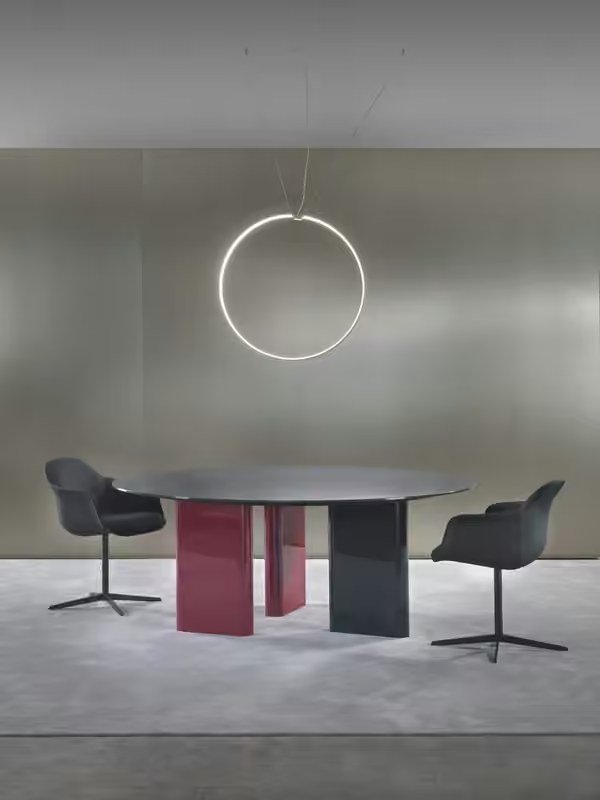
Allow about 60 cm of table edge for each guest, 70 cm if you like room to spread out, and leave about 90 cm between the table and the wall so chairs can slide back. From those three numbers you can size almost any dining table for your room.
What size table seats four, six or eight? As a guide for rectangular tables: about 120 to 140 cm long seats four, 160 to 180 cm seats six, and 200 to 240 cm seats eight. A depth of 90 to 100 cm leaves room for serving dishes in the middle; 80 cm is the practical minimum. For round tables: about 90 to 110 cm across seats four, 120 to 130 cm seats four to six, and 150 cm seats six to eight.
How much space should I leave around the table? About 90 cm from the edge of the table to a wall or a sideboard lets someone sit down and stand up comfortably. Where people also walk behind the chairs, 110 to 120 cm is better. In a smaller room, 75 cm is the least that works.
How high is a dining table? Most dining tables are 74 to 76 cm high, with chair seats at about 45 to 47 cm. Check the arms if your chairs have them: they should slide under the top.
Round or rectangular? A round table brings everyone into one conversation and has no corners to walk into, so it suits square rooms and smaller groups. A long table seats more people along a narrow room and suits large family dinners. An oval combines the two. Look at the legs too: a table on a central base or on solid feet set back from the corners, like the Onno Dining by Giulio Marelli, leaves more room for knees and chairs than four legs at the corners.
Should I choose an extending table? If you host for Eid or family gatherings a few times a year but eat as two or four on most days, an extending table keeps the room open and still welcomes everyone when it matters.
Ready to measure? See the tables from our five houses, or send us your room and we will suggest sizes that fit.


